Veterinary School GPA: VMCAS Requirements and Competitive Averages
Veterinary school is among the most competitive health professions applications in the US, with national acceptance rates of 12 to 15%. The average GPA of admitted DVM students nationally is 3.5 to 3.6, with Purdue's admitted resident mean at 3.71 to 3.74 and non-resident mean at 3.80 to 3.82. VMCAS calculates four separate GPA figures, and the GRE is now required at only two of the 36 accredited US programmes.
Free GPA Calculator
Calculate your GPA instantly

Veterinary school is among the most competitive health professions graduate applications in the United States. With only 36 accredited veterinary programmes nationwide compared to nearly 200 medical schools, approximately 10,800 to 11,000 qualified applicants compete for roughly 3,900 to 4,000 seats each year, producing national acceptance rates of approximately 12 to 15%. The grade point average (GPA) requirements that govern DVM admissions reflect this competition: the stated floor is typically 3.0, the average of admitted students at most programmes is 3.5 to 3.8, and the most competitive programmes at Cornell, UC Davis, Penn Vet, and similar schools see admitted student averages consistently above 3.6.
VMCAS, the Veterinary Medical College Application Service operated by the Association of American Veterinary Medical Colleges (AAVMC), opened the 2026 application cycle on January 21, 2026 with a September 15, 2026 submission deadline for applicants seeking Fall 2027 enrollment. VMCAS calculates up to four separate GPA figures from submitted transcripts, and each is evaluated against programme-specific thresholds. Understanding which GPA figures VMCAS produces and what each programme does with them is the foundation of any realistic vet school application strategy.
How VMCAS Calculates GPA: The Four Figures and What Each Means
VMCAS calculates four GPA figures from submitted transcripts: a cumulative GPA from all attempted college coursework, a science GPA from biology, chemistry, physics, and mathematics courses, a prerequisite GPA from the programme-designated required course list, and a last-45-credit-hour GPA representing the most recent academic performance. Most US veterinary schools evaluate all four figures, and minimums may be applied to any or all of them independently.
The VMCAS cumulative GPA includes every college-level course attempted at every institution attended, using all attempts. Unlike some centralized application services that allow programmes to specify whether to use the highest grade or all grades for repeated courses, VMCAS averages all attempts including repeats. This means a student who earned a C in General Chemistry and retook it for an A has both grades averaged into the VMCAS cumulative and science GPAs. The highest grade recognised by veterinary schools in the VMCAS system is an A at 4.0; institutions such as NC State that award A+ at 4.33 find those grades averaged as 4.0 in the VMCAS calculation.
The science GPA in VMCAS corresponds to Biology, Chemistry, Physics, and Mathematics coursework, similar to the BCPM calculation used in AMCAS for medical school applications. This figure is calculated separately and weighted heavily by most DVM programmes because it directly predicts performance in the DVM curriculum's first two years of preclinical sciences.
The prerequisite GPA is calculated from each specific programme's designated prerequisite course list, which varies by school. A course that satisfies the prerequisite GPA at one programme may not be included in the prerequisite GPA calculation at another, meaning the same transcript can produce different prerequisite GPAs depending on which programme's list is applied.
The last-45-credit-hour GPA is the most recent academic performance measure and carries particular weight for applicants whose cumulative GPA is depressed by early college performance. Several programmes, including Baylor's DPT and similar policies in veterinary admissions, offer pathways for applicants whose cumulative GPA is below the stated minimum but whose last 45 to 60 hours show significantly stronger performance.
For context on how these multiple GPA calculations in veterinary admissions compare to AMCAS, PharmCAS, PTCAS, and OptomCAS calculations across health professional school applications, the guide on GPA requirements for medical school covers the full landscape of clinical doctoral programme GPA standards.

Average GPA of Admitted Veterinary Students: Programme-Level Data
The average GPA of admitted DVM students nationally hovers around 3.5 to 3.6 according to AAVMC admitted student statistics. At highly competitive programmes, admitted student averages reach 3.7 to 3.8. The most accessible US programmes, and Caribbean veterinary schools, admit students with averages in the 3.2 to 3.4 range.
Purdue University College of Veterinary Medicine publishes detailed admitted student data by residency status. For the DVM Class of 2028 and 2029, resident cumulative GPA means were 3.74 and 3.71 respectively, while non-resident means were 3.82 and 3.80. The resident cumulative GPA range for the Class of 2029 extended from 3.31 to 3.99, confirming that some resident applicants are admitted with GPAs below 3.5, but the mean sits well above the stated 3.0 minimum. The core science GPA means for these cohorts were 3.59 and 3.58 for residents, and 3.69 and 3.74 for non-residents.
Penn Vet recommends at least a 3.0 GPA for its application, with the average enrolled cumulative GPA around 3.6. Penn Vet recommends over 600 hours of veterinary experience, among the highest experience requirements in the country.
At the accessible end, Ross Veterinary School in St. Kitts, a Caribbean institution whose graduates are eligible to sit US licensing examinations, reports enrolled student averages of 3.24 cumulative GPA and 3.21 prerequisite GPA. This data confirms that the US veterinary school landscape spans a wide selectivity range, and applicants with GPAs in the 3.2 to 3.4 range who do not gain admission to US DVM programmes have realistic Caribbean school options that still produce NAVLE-eligible graduates.
Lincoln Memorial University College of Veterinary Medicine sets a minimum cumulative GPA of 3.35 and a minimum science GPA of 3.35 for the 2025-2026 cycle, with a 2.8 floor for initial consideration if recent academic improvement over the last two years is documented. LMU-CVM requires 400 veterinary or animal research experience hours and uses a holistic review including the English Casper situational judgment test.
Most US veterinary schools set their stated minimum at 3.0 overall. Oklahoma State University requires 3.0 overall and 2.8 in required courses. Mississippi State requires 3.0 overall with specific GPA criteria for prerequisite subjects. The GPA data that matters most for application strategy is not the stated minimum but the average of admitted students at each specific target programme, because the difference between clearing the minimum and being competitive can be 0.4 to 0.7 GPA points at many programmes.
GRE Status in Veterinary Admissions: What Changed in 2025-2026
The GRE has become largely optional across US veterinary school admissions. As of the 2026 VMCAS cycle, only Oklahoma State University and Tuskegee University still require GRE scores for most applicants. The majority of US DVM programmes no longer require or even formally evaluate GRE scores, shifting the balance of quantitative academic evidence more heavily toward GPA and prerequisite course performance.
This shift mirrors the trend in DPT admissions and is driven by the same body of research: GRE scores did not consistently predict DVM programme academic performance better than undergraduate GPA, and the test created access barriers for applicants from underrepresented communities. The removal of the GRE requirement at most programmes concentrates committee attention on VMCAS-calculated GPAs, veterinary experience hours, personal statements, and letters of recommendation.
The GRE enrolled student averages at programmes that did require or accept GRE scores were typically around 300 to 301 combined verbal and quantitative, with schools like Ross and MSU reporting no fixed minimum GRE scores for their applicants. These averages reflect modest standardised test performance compared to medical or law school GRE-equivalent thresholds, which is consistent with the GRE's limited predictive role in veterinary admissions that led to its de-emphasis.
For the current 2026 cycle, applicants preparing for VMCAS should confirm directly with each target programme whether GRE scores are required, accepted, or entirely unused. Programmes that do not require GRE scores and do not accept them as supplemental evidence make GRE preparation an unnecessary investment of time and resources that could be directed toward GPA and veterinary experience.
Prerequisite Courses: The Science Foundation VMCAS Evaluates
Veterinary school prerequisites typically require 60 to 90 semester hours of science and general education coursework. The core science sequence is more extensive than most other health professional programmes, requiring Biochemistry at the upper-division level, Genetics, and Microbiology in addition to the standard General Biology, General Chemistry, Organic Chemistry, and Physics sequence.
The prerequisite list that distinguishes veterinary school from pharmacy or optometry is the addition of Biochemistry, Genetics, and Microbiology as required courses at virtually every US DVM programme. The University of Florida recommends that no more than three prerequisite courses be missing at the time of VMCAS application submission, with all prerequisites completed before matriculation. Most programmes allow some prerequisites to be in progress during the application cycle but require completion before the class begins.
The minimum grade per prerequisite course at most DVM programmes is C or C-, mirroring the standard across health professional programme applications. A D in any prerequisite typically does not satisfy the requirement regardless of the overall GPA, and the course must be retaken. Because VMCAS averages all attempts rather than using the higher grade, retaking a course where a C was earned adds the new grade to the calculation as an additional data point rather than erasing the original C. A student who earned a C and retakes for an A has averaged (2.0 + 4.0) ÷ 2 = 3.0 quality points per credit for those combined hours in the VMCAS science GPA.
Upper-division Biochemistry is the single course with the most unique weight in veterinary school prerequisite evaluation. A strong grade in upper-division Biochemistry, typically at the 300 or 400 level rather than the 200 level that many biology programmes accept, signals the level of molecular biology and metabolic chemistry understanding that the DVM curriculum's pharmacology, pathology, and clinical sciences demand. The Virginia-Maryland College of Veterinary Medicine, which implemented competency-based admissions for the class entering in 2025, includes the academic record within its four domains of competency evaluated holistically alongside experiences, letters, and situational judgment assessments.
Veterinary and Animal Experience: The Non-GPA Factor That Most Defines Competitive Applications
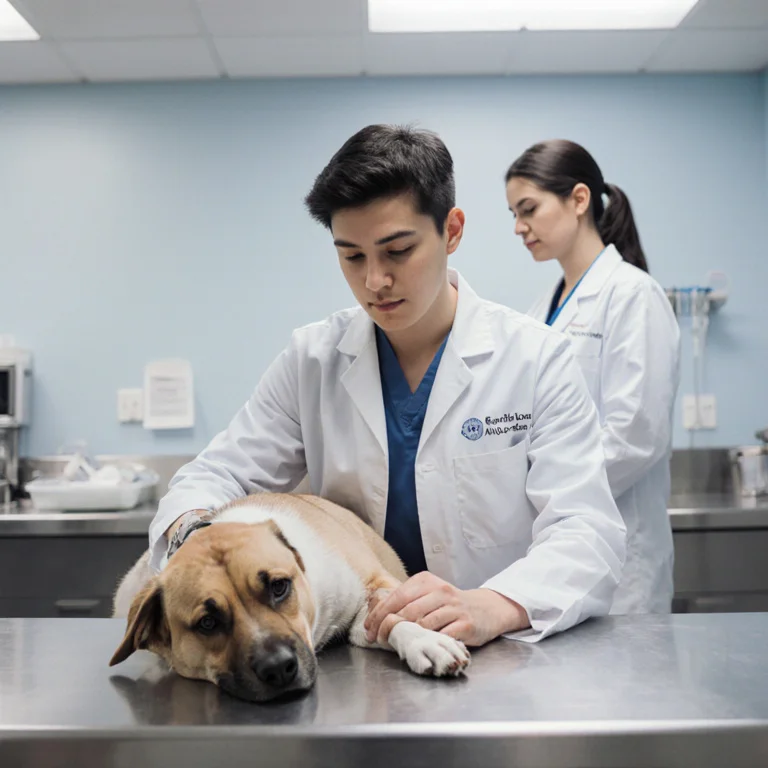
Most US veterinary schools require 150 to 500 or more documented hours of veterinary and animal experience, with exposure across multiple species strongly encouraged. The experience credential in veterinary admissions is more extensivein scope than shadowing in optometry or observation in physical therapy, because it must demonstrate familiarity with the breadth of species, settings, and clinical contexts that DVM practice encompasses.
Penn Vet's recommendation of 600 or more veterinary experience hours represents the upper end of the experience spectrum. Most programmes cluster around 150 to 400 hours as the minimum, with the practical competitive expectation sitting at 500 or more hours across diverse settings. The settings that matter are not limited to companion animal clinics. A competitive pre-vet applicant typically accumulates experience in at least two or three of the following contexts: small animal clinical practice, large animal or livestock work, exotic or zoo animal settings, research animal facilities, and wildlife or shelter medicine environments.
The diversity of species exposure is evaluated qualitatively, not just quantitatively. An applicant with 500 hours exclusively in a single dog-and-cat clinic is presenting a narrower experience record than one with 200 hours in companion animal practice, 150 hours working with horses or cattle, and 100 hours in a research or shelter setting. Most DVM programmes explicitly ask applicants to describe the species diversity of their experience in the VMCAS application.
The DVM letter of recommendation from a licensed veterinarian is the experience credential equivalent of the OD letter in optometry or the PT letter in physical therapy: it is the most important single letter in the veterinary school application. A DVM supervisor who can describe the applicant's understanding of animal behaviour, clinical observation skills, professional communication with clients, and sustained engagement over multiple months or years provides evidence that directly addresses the committee's core question about readiness for the DVM curriculum and clinical environment.
State Residency and Contractual Seats: The Factor That Changes Which GPA Is Competitive
State veterinary schools are some of the most residence-restrictive professional programmes in graduate education. Most state-funded DVM programmes reserve 75 to 90% of their seats for in-state residents, with the remaining seats distributed between contractual out-of-state applicants and a small pool of non-contractual out-of-state applicants. The competitive GPA for a given programme's non-resident seats is typically 0.1 to 0.2 GPA points higher than the resident average.
Purdue's published data illustrates this directly: non-resident cumulative GPA means were 3.82 and 3.80 for Classes of 2028 and 2029, compared to resident means of 3.74 and 3.71. The non-resident pool at most state veterinary schools is smaller and more competitive, because it draws from the national applicant pool rather than the in-state pool.
Many states that do not have their own veterinary school participate in contractual agreements, such as the Western Regional Graduate Program (WRGP) or Southern Regional Education Board (SREB) arrangements, that allow residents of non-veterinary-school states to apply to partnering institutions at reduced tuition rates. These contractual seats carry their own GPA and experience expectations that are typically similar to in-state thresholds rather than the more competitive non-resident pool.
An applicant from a state without a veterinary school who is applying as a contractual student through the WRGP or SREB should confirm which partner institutions are available for their home state, because the available contracted schools change by cycle and the GPA thresholds for contractual seats may differ from both resident and non-resident admission standards.
Applying With a Below-Competitive GPA: Realistic Pathways
According to AAVMC admitted student statistics, the average GPA for admitted students hovers around 3.5 to 3.6. For applicants below that range but above 3.0, the most effective single intervention before applying is the last-45-credit-hour GPA. Because VMCAS calculates and programmes evaluate this figure specifically to identify recent upward academic trajectories, a student who completed an additional year of strong academic coursework after an initially weak undergraduate record can present a last-45-hour GPA meaningfully above the cumulative average.
Post-baccalaureate coursework in upper-division genetics, advanced biochemistry, microbiology, or physiology serves two purposes simultaneously: it improves the last-45-credit-hour GPA, and it produces prerequisite or science GPA entries in subjects that directly demonstrate readiness for the DVM curriculum. A student who earns an A in upper-division Genetics after a weak undergraduate science record has produced the most specific type of academic evidence that veterinary admissions committees find credible.
For applicants whose cumulative GPA falls below 3.0, the Caribbean and international DVM pathways through VMCAS-participating programmes provide an alternative route to DVM qualification with NAVLE eligibility. These programmes, including Ross, St. George's University, and similar institutions, admit students with GPAs in the 2.8 to 3.3 range and produce graduates who are eligible for licensure in most US states, though residency programme admission and specialist training pathways are generally more competitive for graduates of non-US DVM programmes.
The guide on undergraduate GPA and graduate school admissions covers the full range of graduate programme GPA standards across health professional and academic doctoral programmes, providing the comparative context that helps applicants calibrate their vet school targets against the full landscape.
What a Competitive Veterinary School Application Looks Like in 2026
A competitive veterinary school application for the Fall 2027 entering class, submitted through VMCAS 2026, typically presents the following academic and experiential profile based on published admitted student data across US DVM programmes.
A cumulative VMCAS GPA of 3.5 or above and a science GPA of 3.5 or above places an applicant in the competitive range at most US DVM programmes. A 3.6 or above in both figures places the applicant in the competitive range at the most selective programmes including Cornell, Penn, UC Davis, and similar institutions.
Veterinary experience of 500 or more hours across at least two species categories, with at least one DVM recommendation letter that describes specific clinical observations, patient handling, and professional development in detail.
A personal statement that demonstrates genuine understanding of what veterinary medicine involves across multiple species and settings, rather than a generic statement about loving animals, and that connects specific experiences to the academic and clinical competencies the DVM curriculum develops.
For the context needed to understand where a specific GPA sits in the broader competitive landscape of graduate health professional admissions, the guide on what is a good GPA provides the benchmarks from undergraduate academic standing through professional doctoral programme thresholds.
Calculate your current GPA and assess your veterinary school readiness at gpacalculator.uk.
Frequently Asked Questions
What GPA do you need for veterinary school?
How does VMCAS calculate GPA?
Is the GRE required for veterinary school in 2026?
How many veterinary experience hours do you need for DVM admissions?
How does state residency affect veterinary school GPA requirements?
Written by
Adnan Ajmal
Software Developer
Adnan built GPA Calculator to give students a free, transparent tool for tracking their academic standing. All formulas follow the standard weighted average method used by US university registrars. Learn more about this site.
Related Articles

Law School GPA: How LSAC Calculates Your Academic Summary Report
LSAC's Credential Assembly Service recalculates every applicant's GPA using a 4.33 scale where A+ equals 4.33, includes all undergraduate courses from every institution attended, incorporates both the original grade and the retake grade for repeated courses, and does not recognise institutional grade forgiveness. The CAS GPA is the binding academic number that every law school evaluates, reports to the ABA, and uses in published median GPA rankings.

PA School GPA: CASPA Requirements and How to Calculate Science GPA
CASPA calculates GPA differently from undergraduate institutions: all attempts including repeated courses are averaged, not replaced. The national average overall GPA for accepted PA students is 3.6 and the average science GPA is 3.5. Most programmes require a minimum 3.0, but competitive programmes set their effective floors at 3.2 to 3.5. Calculating the CASPA GPA before submitting is the most important pre-application step for PA school applicants.

Physical Therapy School GPA: DPT Program Admission Statistics 2026
The DPT is the only entry-level credential for physical therapist practice and one of the most competitive healthcare graduate applications in the US. The stated GPA minimum at most programmes is 3.0, but admitted student averages at competitive programmes reach 3.59 to 3.73 overall. PTCAS calculates three separate GPA figures and each may be evaluated against programme-specific thresholds independently.

Optometry School GPA: OAT Scores and Admission Benchmarks 2026
The average GPA of admitted optometry students is 3.5 to 3.6 in 2025-2026 cycles. The OAT Academic Average of competitive applicants ranges from 320 to 360 depending on programme selectivity, with 300 representing the 50th percentile. The GPA and OAT score are evaluated together as a consistency signal, and significant divergence between the two figures typically requires explanation in the personal statement.