GPA Resources
This page collects guides and articles on GPA calculation, weighted vs. unweighted GPA, college admissions requirements, and study strategies. Each resource is written to directly answer common student questions about understanding and improving grade point average.
Last updated: July 2026

PhD Program GPA Requirements: What Admissions Committees Actually Look For
PhD admissions committees evaluate GPA through three lenses: trajectory (did grades improve over time?), subject alignment (were strong grades earned in relevant courses?), and institutional context (what does this GPA represent at this institution?). The minimum stated threshold is 3.0 at most programmes; the competitive threshold for admission at programmes of significant quality is 3.5 or above.

Academic Dismissal and GPA: Your Options for Readmission
Academic dismissal is the formal separation of a student from their institution after sustained failure to meet minimum GPA standards, typically a 2.0 cumulative average. Most institutions provide a structured readmission pathway through a formal appeal process, a required separation period of one academic year, and specific academic conditions attached to reinstatement.

Grade Forgiveness Policies: Which Colleges Offer Second Chances
Grade forgiveness policies, also called academic renewal, fresh start, or grade replacement depending on the institution, allow students to reduce or eliminate the GPA impact of previously earned failing grades. The original grades remain on the transcript in nearly all cases but are excluded from the cumulative GPA calculation. Graduate and professional school applications, including AMCAS and LSAC, typically include all attempted courses regardless of institutional forgiveness.

AP Exam Scores vs AP Class Grades: Which Matters More for GPA
AP class grades enter the high school weighted GPA calculation directly. AP exam scores do not. An A in AP Chemistry earns 5.0 weighted quality points regardless of what score the student earns in May. However, colleges use AP exam scores as an external benchmark to evaluate whether class grades reflect genuine mastery, and in the current test-optional environment, this evaluative role has grown.

Dual Enrollment GPA: How College Credits in High School Affect Your GPA
Dual enrollment courses create two simultaneous GPA effects: they enter the high school GPA based on the district's weighting policy, and they create a permanent college transcript entry at the partner institution. A grade in a dual enrollment course taken during 11th grade will appear in professional school GPA calculations, including AMCAS and LSAC, years after the student has graduated from college.

Summer School GPA: Does It Help or Hurt Your Cumulative Average
Summer school can raise, hold flat, or lower a cumulative GPA depending on where the course is taken and what grade is earned. A summer course at the home institution enters the GPA formula directly. A summer course at a community college or another institution typically contributes credit hours but not the grade, leaving the cumulative GPA unchanged regardless of performance.

Incomplete Grades and GPA: How I Grades Affect Your Academic Standing
An incomplete grade (I) is excluded from the GPA calculation while it remains active at most institutions, because it carries no grade point value. The consequential question is what the I converts to when the resolution deadline passes: at most institutions, an unresolved incomplete automatically becomes an F, entering GPA at 0.0 quality points per credit hour and producing the same damage as a failed course.

Failing a Class: How One F Affects Your GPA and What to Do Next
Failing a class earns 0.0 quality points per credit hour and adds those credits to the GPA denominator without raising the numerator. The exact impact depends on how many credits were completed before the failure: the same 3-credit F drops a 3.2 GPA by 0.53 points at 15 completed credits but only 0.20 points at 45 completed credits.

Senior Year College GPA: Finishing Strong for Employers and Grad School
Senior year college GPA is the final number on a permanent academic record that appears in employer background checks, graduate school transcript requests, and professional credential verifications. According to NACE's 2024 Job Outlook Report, 38.3% of employers screen candidates by GPA, making the four-year cumulative average that includes senior year directly consequential in the first years after graduation.

Junior Year College GPA: Preparing for Graduate School Applications
Junior year college GPA carries disproportionate weight in graduate school applications because upper-division major courses in the third year are the most direct available evidence of graduate school readiness. Several graduate programmes, including systems at the University of Wisconsin-Madison and UCLA, specify minimum GPA requirements for the junior and senior years specifically.

Sophomore Year College GPA: Declaring Your Major with Confidence
Sophomore year is when most colleges require major declaration and when competitive programme GPA thresholds, distinct from the institutional enrolment floor, first become consequential. Nursing programmes typically require 3.0 to 3.5 in science prerequisites, engineering departments apply separate internal GPA cutoffs, and all programme admission records are permanently visible in graduate and professional school applications.

College Freshman GPA: The Shock of First Semester Grades
A GPA drop in the first semester of college is among the most common and most predictable academic events in higher education. Students entering university with 90% or higher high school averages experienced an 11.9 percentage point drop on arrival according to Globe and Mail research. College Board data on 97,282 students found that first-year GPA is a stronger predictor of graduation than ACT scores.

Senior Year GPA Slump: How Colleges View Dropping Grades in 12th Grade
Senior year grades are reviewed by colleges through a mid-year report in January and a final transcript in June. Both documents can trigger consequences ranging from scholarship reduction to rescinded admission offers for students whose grades decline significantly after an acceptance is received.

Junior Year GPA: Why It Carries the Most Weight in College Admissions
Junior year is the most scrutinised year of high school in college admissions because it is the only complete recent academic year available when applications are submitted in the fall of senior year. The GPA a student builds in 11th grade carries more weight in admissions decisions than any other single year.

Sophomore Year GPA: The Most Important Year for College Prep
Sophomore year GPA is the foundation of the University of California GPA formula, the last year colleges apply freshman-year forgiveness to academic expectations, and the year that determines whether a student's course sequence supports genuine AP and advanced access in junior and senior year.

Freshman Year High School GPA: Starting Strong in 9th Grade
Freshman year GPA begins with the first assignment of 9th grade and carries more mathematical weight per grade than any subsequent year. University of Chicago Consortium research found that 9th grade GPA predicts 11th grade performance, graduation, and college enrollment better than standardised test scores.

8th Grade GPA and High School Course Selection: Building the Foundation
The course selection decisions made in 8th grade determine which four-year high school sequence becomes available. The mathematics course a student takes in 8th grade defines the ceiling they can reach by senior year. The GPA earned in 8th grade determines the course level they enter at 9th grade.

7th Grade GPA: Why Middle School Grades Matter for High School Placement
A 7th grade GPA does not appear on a college transcript, but it determines which math, English, and science courses a student enters in 9th grade. High school placement decisions made from middle school grades shape the entire four-year academic record that colleges evaluate.

Low-Income Student GPA Barriers: Overcoming Financial Stress on Grades
Financial stress suppresses college GPA through four specific mechanisms: time displacement from work hours, cognitive load from persistent financial worry, food and housing insecurity that disrupts concentration and attendance, and unequal access to academic resources. Each is documented in research. Each is addressable through specific campus resources and academic strategies.

Military Veteran GPA: Converting Military Training to College Credits
Military veterans entering college carry a unique academic asset: training and occupational experience that can convert to college credits through the Joint Services Transcript and ACE recommendations. How those credits interact with GPA, however, depends on specific institutional policies that most veterans discover too late to plan around.

Online Student GPA: Do Online Classes Count the Same as In-Person
Online classes count toward GPA in exactly the same way as in-person classes at the vast majority of US colleges. The grade enters the same credit-weighted formula and produces identical quality points. Three specific conditions can change this: pass/fail grading, transfer credits from another institution, and the accreditation status of the originating school.

Community College Transfer GPA: What Four-Year Schools Really Look For
Transferring from a community college to a four-year university depends more heavily on grade point average (GPA) than any other single factor in the application. The thresholds that matter, however, vary sharply by institution type, target major, and whether an articulation agreement covers the transfer pathway.

Homeschool GPA: How to Calculate and Present It to Colleges
Homeschool families are responsible for calculating their student's GPA without a registrar, a standardised grading system, or institutional backing. A correctly built homeschool GPA, supported by a coherent transcript and verifiable documentation, carries full weight in college admissions and scholarship decisions.

Non-Traditional Student GPA: Returning to College After Years Away
More than 36 million adults in the US hold some college education but no credential. Returning students who re-enroll after years away face GPA challenges that differ in specific and predictable ways from those of traditional students, including decisions about old transcripts, academic forgiveness policies, and rebuilding study skills after a long break.

Student-Athlete GPA Requirements: Balancing Sports and Academics
Student-athletes in NCAA Division I must maintain a minimum 1.8 cumulative GPA in their first year, rising to 2.0 by year three, while completing 40% of degree requirements by the end of sophomore year. Missing any single threshold costs athletic eligibility immediately, regardless of how well the student performs on the field.

International Student GPA Struggles: Adjusting to US Grading Systems
International students arriving in the US encounter a grade point average (GPA) system that differs structurally from percentage-based, classification-based, and inverted-scale grading systems used across Asia, Europe, and beyond. The transition catches many high-performing students off guard and suppresses GPA in the first one to two semesters through predictable, avoidable mechanisms.

First-Generation College Student GPA Challenges and Support Strategies
First-generation college students earn lower cumulative GPAs and graduate at roughly half the rate of continuing-generation peers. The GPA gap stems from specific, documented barriers: the hidden curriculum of higher education, weaker institutional navigation, imposter syndrome, and financial pressures that crowd out study time.

How Working Part-Time Affects Your College GPA: What the Research Shows
Part-time employment affects college GPA differently depending on the number of hours worked per week. Students working fewer than 15 hours weekly often earn higher GPAs than non-working peers, while those exceeding 20 hours show consistent GPA decline across multiple large-scale studies.

What GPA Do You Need for a Full Ride Scholarship
Most full ride scholarships require a minimum GPA between 3.0 and 3.5, but competitive applicants typically hold 3.8 to 4.0. The exact threshold depends on whether the award is merit-based, need-based, athletic, or institutional.

GPA Requirements for a Full Ride Scholarship: Benchmarks by Type
Most full ride scholarships require a GPA between 3.5 and 4.0, but the exact threshold depends on whether the award is merit-based, need-based, athletic, or institutional. This breakdown covers minimum and competitive GPA benchmarks for each type.

What GPA Do You Need for Dental School in 2026? (DAT + GPA Breakdown)
Most dental school matriculants carry overall GPAs of 3.5 to 3.7 and BCP science GPAs of 3.4 to 3.7, according to ADEA data. AADSAS calculates four separate GPA figures from all transcripts, counts every course attempt, and uses the new 200–600 DAT scale introduced in March 2025.

GPA Calculator for Engineering Students: How to Calculate Your Technical GPA
Engineering students maintain two GPA figures: a cumulative GPA covering all coursework and a technical GPA covering only engineering, mathematics, and science courses. The technical GPA is used for major admission, graduation clearance, and employer screening in technical fields.

GPA Impact of Withdrawals, Incompletes, and W Grades
A standard W grade does not affect GPA but reduces the SAP completion rate. A WF grade enters the GPA as an F. An incomplete grade stays outside the GPA until it resolves, then converts to a final grade. Each notation has different consequences for GPA, financial aid, and graduate admissions.

What GPA Do You Need for Medical School in 2026
The average GPA for MD matriculants in the 2025 application cycle was 3.81 cumulative and 3.82 science (BCPM), according to AAMC FACTS data. AMCAS calculates both figures independently from all transcripts, counts every attempt of repeated courses, and does not apply grade replacement.

International GPA Conversion Guide (2026)
International GPA conversion requires country-specific tables, not proportional math. A 75 percent in South Africa equals a 4.0 U.S. GPA. Germany's 1.7 equals roughly a 3.3. This guide covers the most common systems and when official credential evaluation from WES or a NACES member is required.

Test-Optional vs. Test-Flexible Admissions and GPA Weight (2026)
Test-optional, test-flexible, test-blind, and test-required are four distinct policies that assign different weight to GPA in admissions. In 2026, six of eight Ivy League schools have returned to requiring scores, while over 90 percent of U.S. four-year colleges remain test-optional.

Harvard's 20% A-Grade Cap and Grade Inflation Crisis (2026)
Harvard faculty voted in May 2026 on a proposal to cap solid-A grades at 20 percent of students per course. The vote follows data showing A grades rose from 24 percent of all marks in 2005 to over 60 percent in 2025, compressing the GPA scale until summa cum laude requires a 3.989 to differentiate candidates.

Minimum GPA Requirements: Academic Probation, Dean's List and Graduation
GPA thresholds determine academic standing, Dean's List eligibility, and graduation honors at every college. The probation floor is 2.0 at most institutions. Dean's List requires 3.5 with at least 12 credit hours. Latin honors at graduation begin at 3.5 for cum laude and reach 3.9 or higher for summa cum laude.

Retaking a Class for GPA: When It Helps (and When It Doesn't)
Retaking a class improves GPA only when the school uses grade replacement and the credit hours are high enough to move the cumulative average meaningfully. Under grade averaging policies, retaking a class rarely produces the GPA gain students expect.

What Is a Good GPA? Benchmarks for College, Grad School and Jobs (2026)
A good GPA depends on the goal. For most college programs, 3.0 is the minimum threshold that matters. For competitive graduate programs, employers in finance and consulting, and merit scholarships, the practical floor starts at 3.5. The national average college GPA sits at 3.15 according to NCES data.

Transfer Student GPA: How to Combine GPAs from Two Colleges
Transfer student GPA is calculated by combining the quality points from each institution using a credit-weighted formula, not by averaging the two GPAs directly. The result is an all-institution GPA that reflects the full undergraduate record across both schools.

How to Calculate Semester GPA (Not Cumulative): Step-by-Step
Semester GPA measures academic performance for a single term by dividing total quality points earned by total credit hours attempted. The calculation uses only the courses from that one semester, not any prior term.

How to Raise Your GPA: Practical Strategies That Actually Work
Whether you had a rough semester, started college on shaky footing, or simply want to push your GPA higher, raising your grade point average is absolutely possible with the right approach.
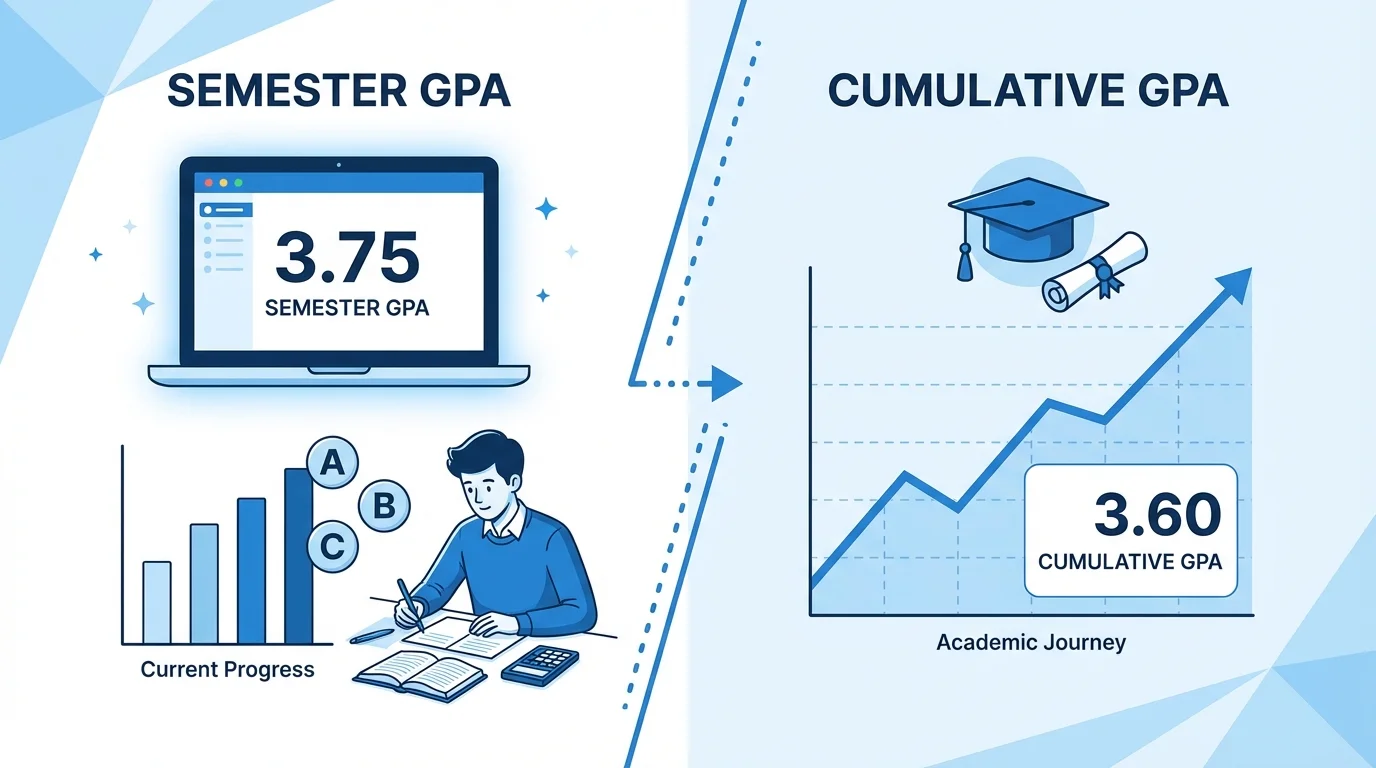
Cumulative GPA vs Semester GPA Explained
Notice that simply averaging the four semester GPAs gives 3.33 as well in this particular case, but that is a coincidence caused by the similar credit hour counts per semester.
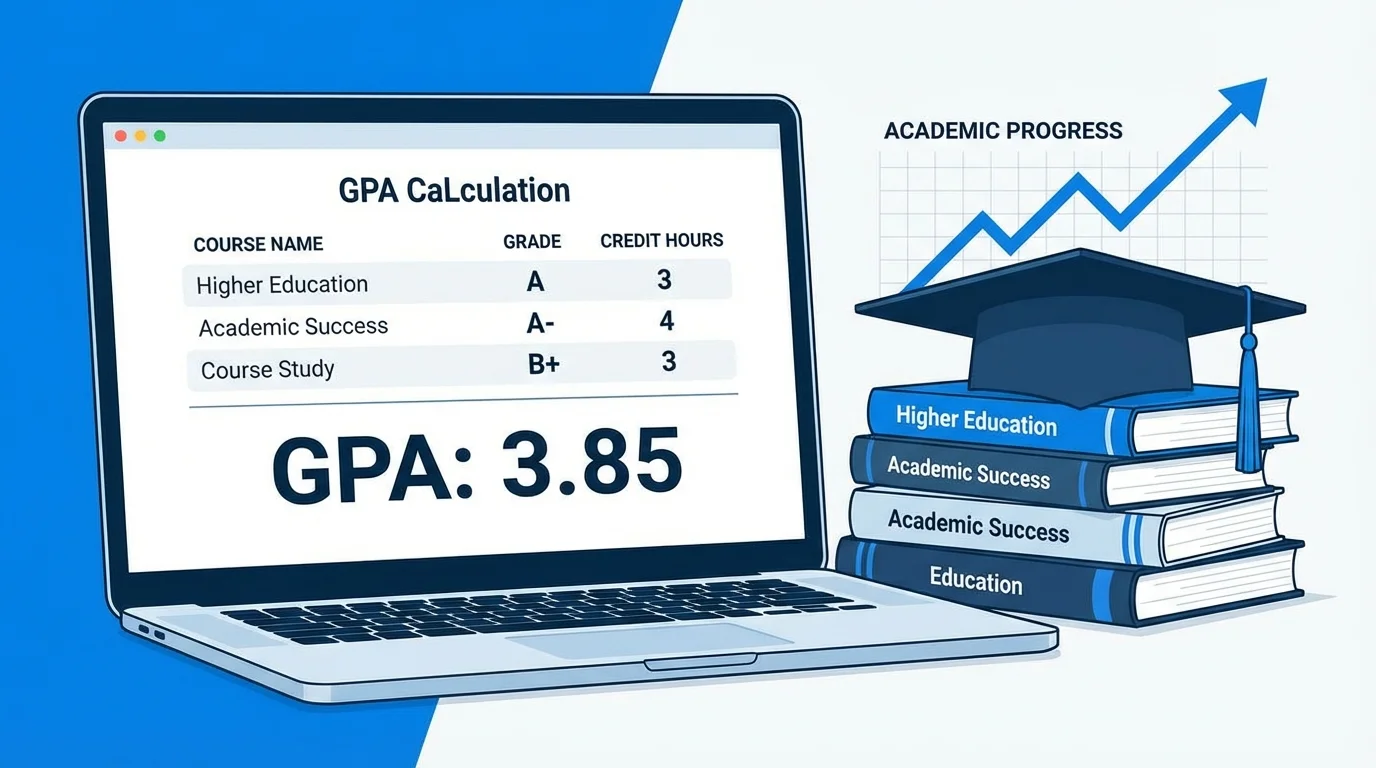
GPA Calculator Guide for Students
Keeping track of your grades across multiple courses and semesters takes real effort. Doing the math by hand every time you want to check your GPA is tedious and leaves plenty of room for error.
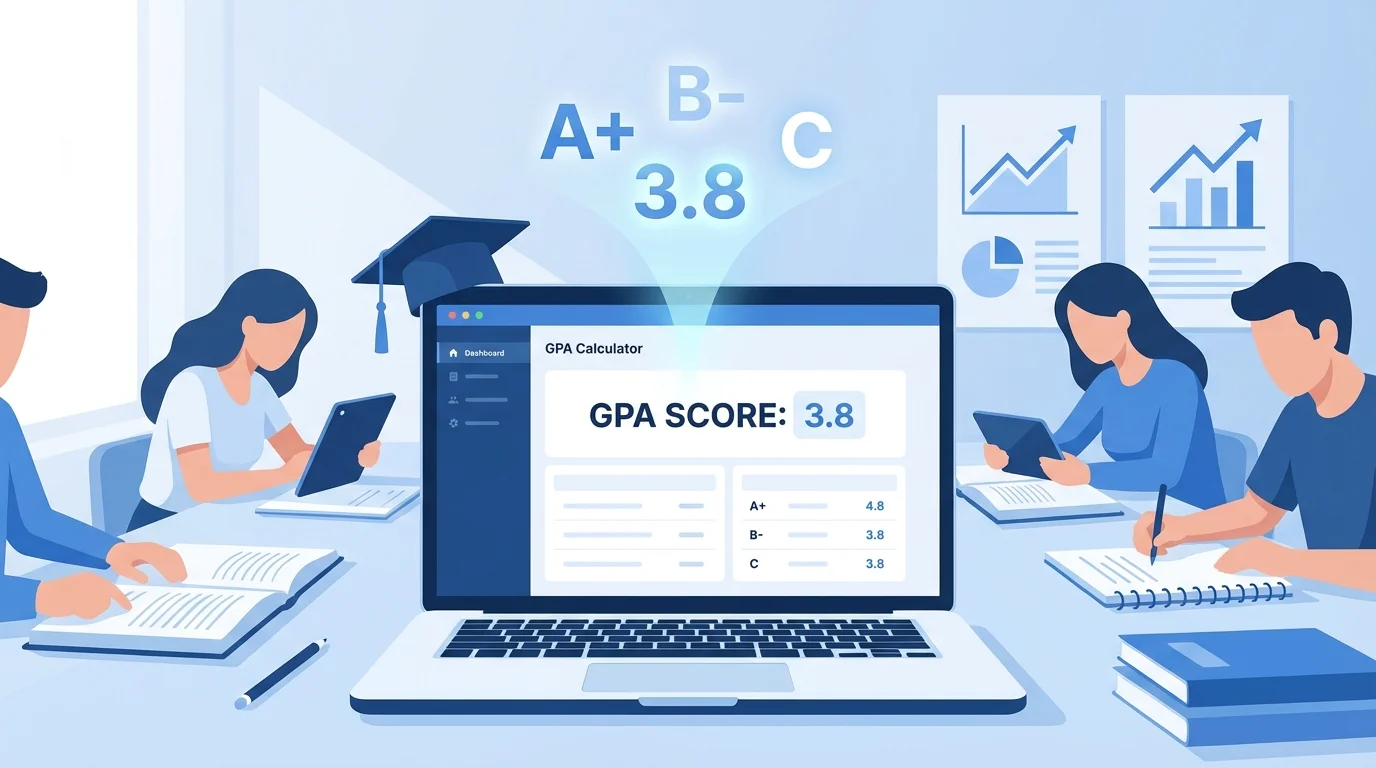
What Is GPA and How Does It Work?
Most students hear the term GPA throughout their entire school life, but very few actually stop to understand what it means and how it is calculated.

How to Calculate GPA: Complete Step-by-Step Guide
Learn how to calculate GPA step by step with clear examples. Understand weighted vs unweighted GPA, credit hours, and use our free GPA calculator to compute your grade point average instantly.

Does Retaking a Class Replace Your GPA?
Retaking a class replaces your Grade Point Average (GPA) only at schools with a formal grade replacement or grade forgiveness policy. Without one, both the original and new grade count in the cumulative GPA calculation.

How to Calculate Your GPA from Percentage Grades
Converting percentage grades to GPA requires mapping each percentage to a letter grade, then applying the 4.0 scale point values weighted by credit hours. The two-step conversion method works for both single-course and cumulative GPA calculations.

GPA vs Class Rank: Which Matters More for College Admissions
GPA carries more weight than class rank in college admissions. According to NACAC data, only 9% of colleges rate class rank as considerably important compared to 23% in 2007, while over 75% of colleges list overall GPA as a top admissions factor.
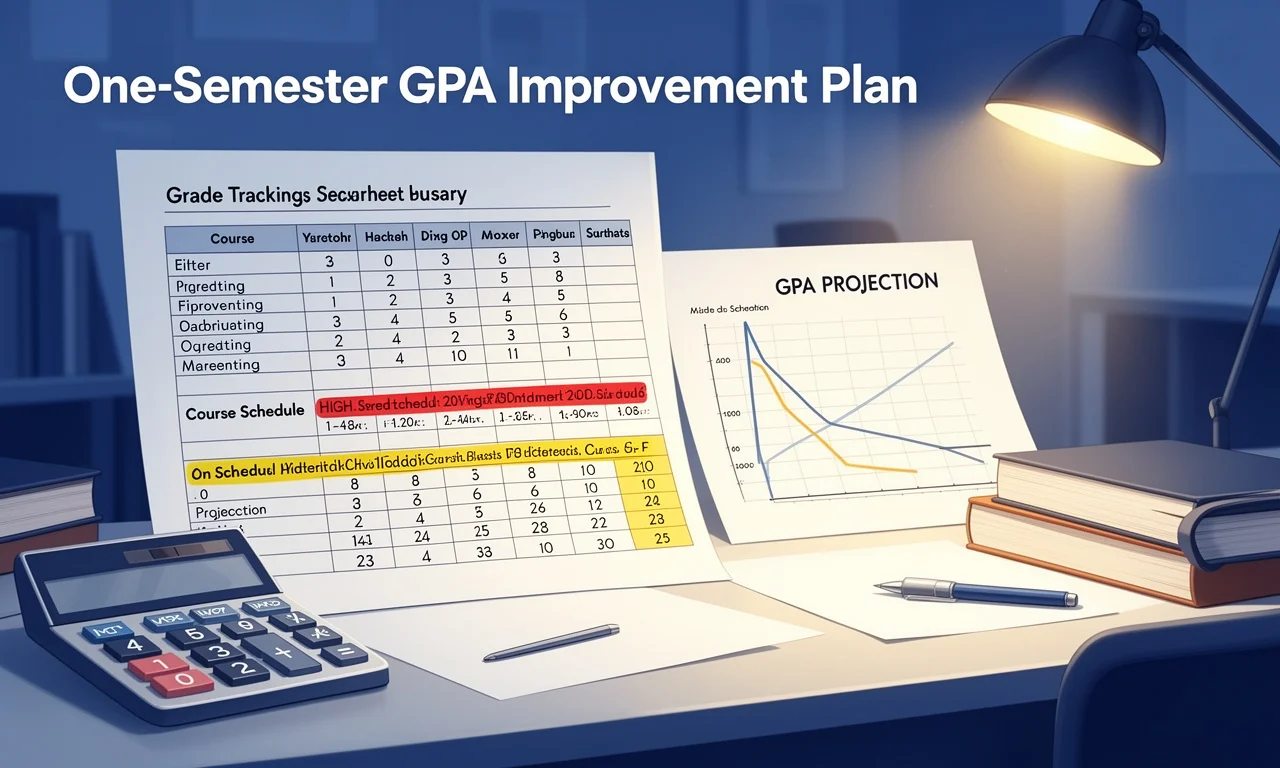
How to Raise Your GPA in One Semester
Raising GPA in one semester is possible, but the gain is capped by total completed credits. A student with 30 credits can gain up to 0.5 GPA points in one 15-credit all-A semester. A student with 90 credits gains at most 0.17 points from the same performance.
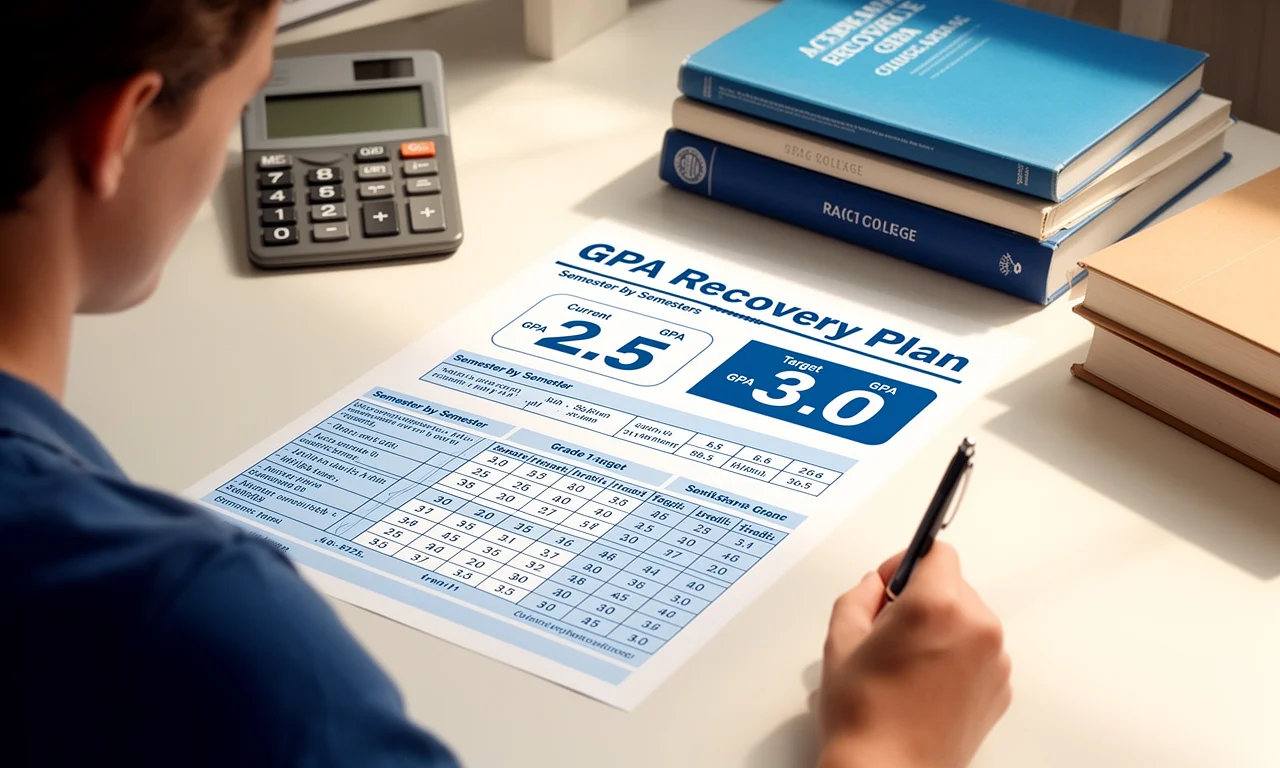
Raising a 2.5 GPA to 3.0: The Exact Math and a Semester Plan
Raising a GPA from 2.5 to 3.0 requires 30 all-A credits at 30 completed credits, or up to 75 all-A credits at 90 completed credits. The exact number depends on how many credit hours have already been attempted.
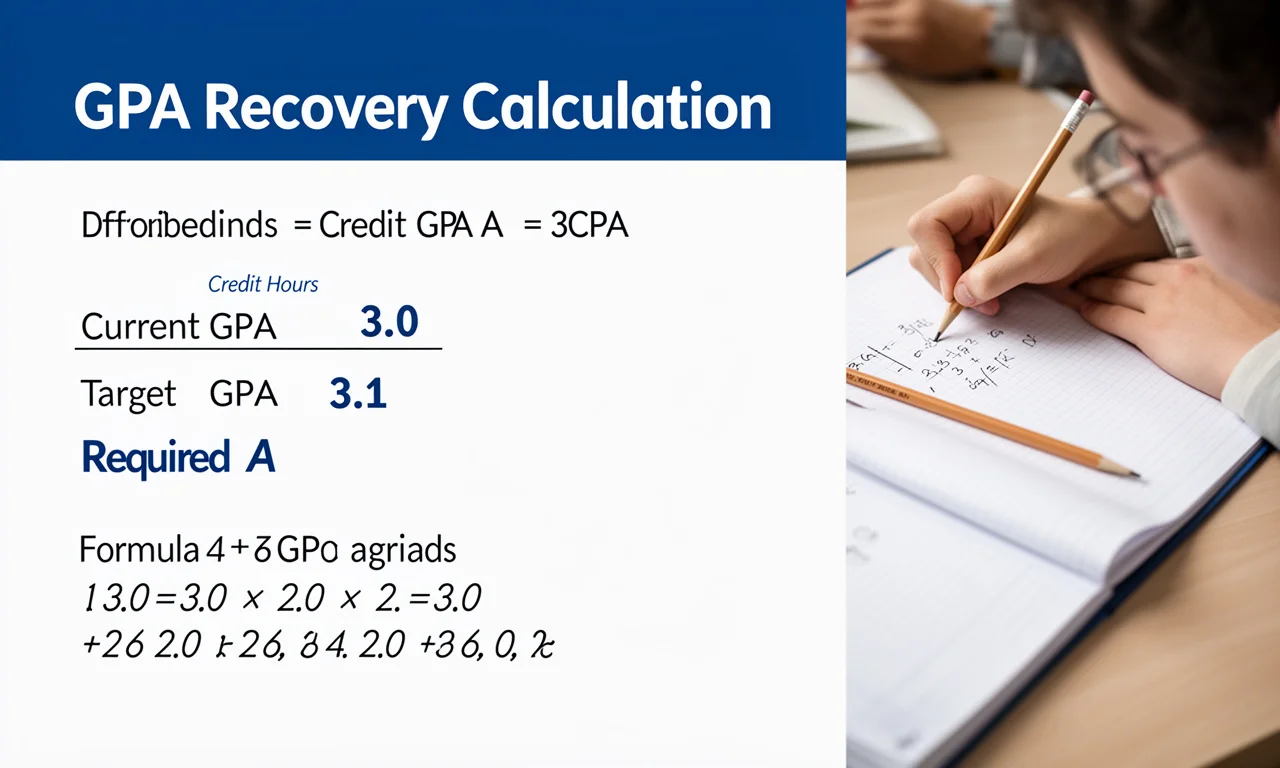
How Many A's It Takes to Raise Your GPA by 0.1
The number of A grades needed to raise a GPA by 0.1 depends on total credit hours already completed. A student with 30 credits needs fewer A-grade courses than one with 90 credits earning the same target increase.

Nursing School GPA Requirements by Program Type
GPA requirements for nursing school vary by program level. Here is what ADN, BSN, MSN, NP, and DNP programs typically expect, and what competitive applicants actually need.
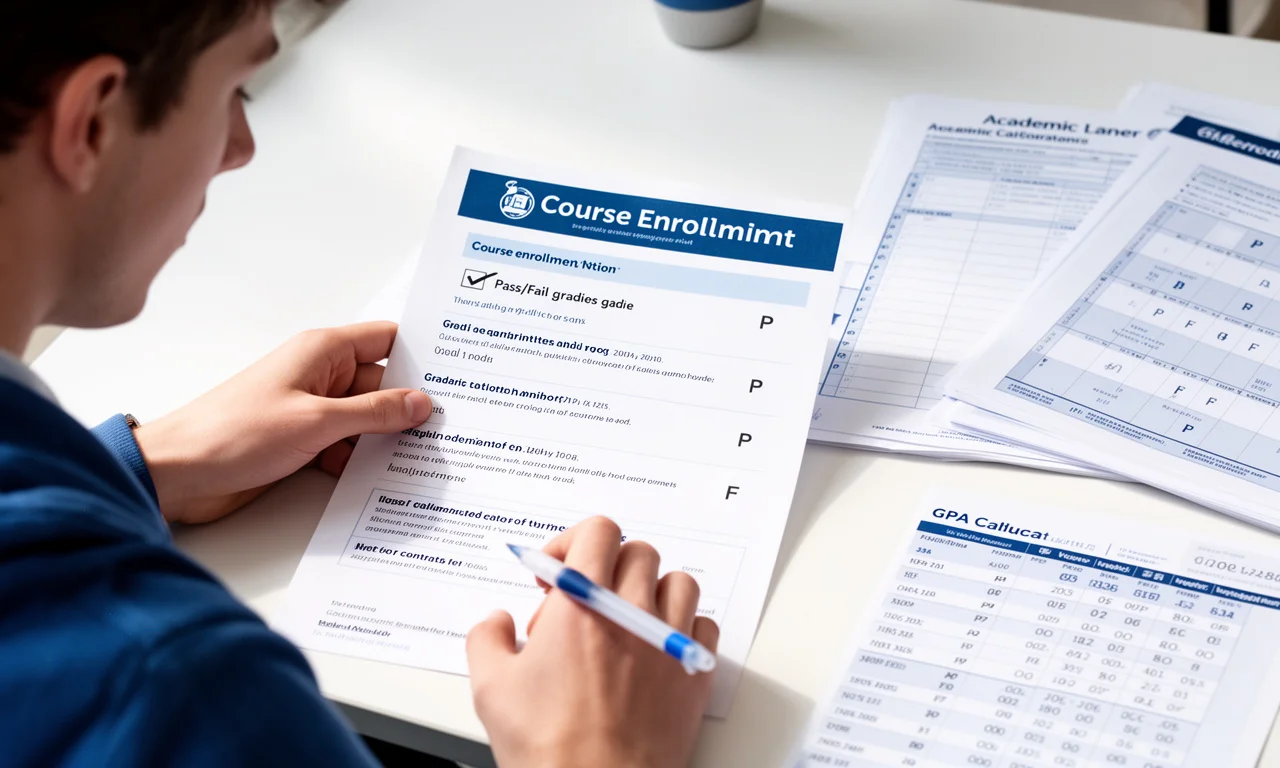
Pass/Fail Classes and GPA: What Actually Changes
A passing grade in a pass/fail class does not affect GPA. A failing grade does — it adds 0.0 quality points while counting the credit hours as attempted, lowering the cumulative GPA. The two outcomes are not symmetrical.

How to Score the Highest GPA in Your Class
Scoring the highest GPA in a class requires strategic course selection, within-semester grade management, and study methods calibrated to each assessment's weight. Students who reach 3.9 to 4.0 consistently do all three simultaneously.

How to Recover Academically After a Bad Semester
Academic recovery after a bad semester requires three actions: diagnosing the cause, calculating the GPA impact, and executing a credit-weighted recovery plan across the next one to three semesters.

How to Calculate Cumulative GPA Across Multiple Semesters
Cumulative GPA is the credit-weighted average of all grade points earned across every semester attempted. Calculating it requires multiplying each semester's GPA by its credit hours, summing all quality points, then dividing by total credit hours — never averaging semester GPAs directly.
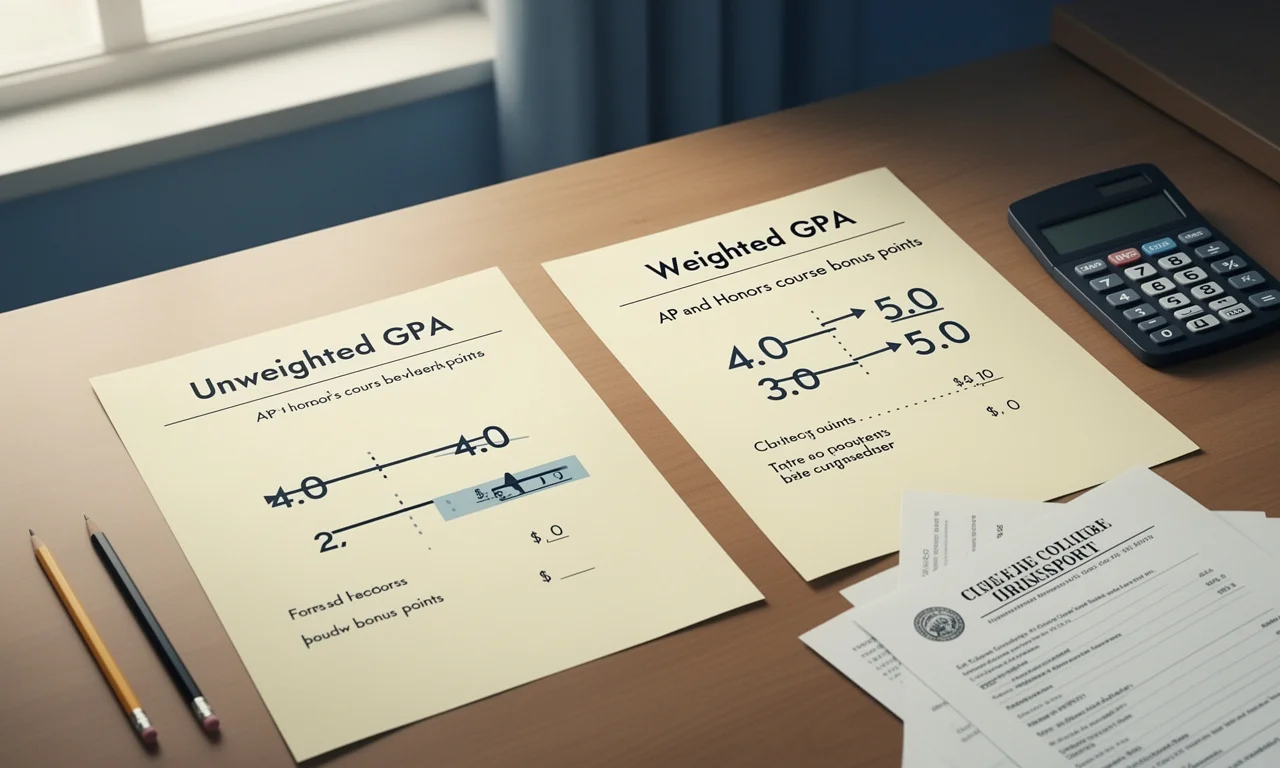
How to Calculate Weighted vs Unweighted GPA
Unweighted GPA uses a standard 4.0 scale and treats all courses equally. Weighted GPA adds 0.5 for Honors and 1.0 for AP or IB courses, producing scores above 4.0 for students in advanced classes. Both use the credit-weighted quality points formula.

Minimum GPA Requirements for College Admission by State
Minimum GPA requirements for college admission vary by state and institution type. California's UC system requires a 3.0 for residents, Florida's state universities require a 2.5 in core courses, and Massachusetts public universities require a 3.0 weighted GPA.

Your Undergraduate GPA Matters for Graduate School Admissions
An undergraduate GPA is a primary factor in graduate school admissions, with most programs requiring a minimum of 3.0 and competitive programs expecting 3.3 to 3.8. How much weight a GPA carries depends on the program type, field of study, and the strength of the rest of the application.

How GPA Affects Your Job Search After Graduation
A Grade Point Average (GPA) affects the job search after graduation most during the first two to three years, when employers use it as a screening tool for entry-level roles in competitive fields like finance, consulting, and accounting.